
Compressor Down? Get Back Up and Running, Fast
Same day or next day response from compressed air specialists. One call, one engineer, one fix



Why choose Airmech for air compressor servicing and maintenance
Our expert, certified technicians providing reliable, customised, and efficient service tailored to your specific needs.
45 years being the most trusted compressed air provider in the UK.
Nationwide network of screw compressed air engineering experts.
Google's top-rated customer service provider in 2024.
Every Hour Without Air Costs You Money
When your compressor stops, so does production. Every hour costs money. You do not have time to wait for someone who might not know what they are doing.
You have called around before. Vague ETAs. Engineers who turn up without the right parts. Diagnostic guesswork that leads to repeat visits and repeat invoices.
That is exactly why we built Rapid Restore.

Rapid Restore Breakdown Callout
Same day or next day response. Diagnostic expertise across all major brands. Clear ETA. No chasing. One call to one number and we handle the rest.
How It Works
- Call or fill in the form. Describe the fault, your site address, and urgency.
- We assign an engineer and confirm your ETA. You know who is coming and when.
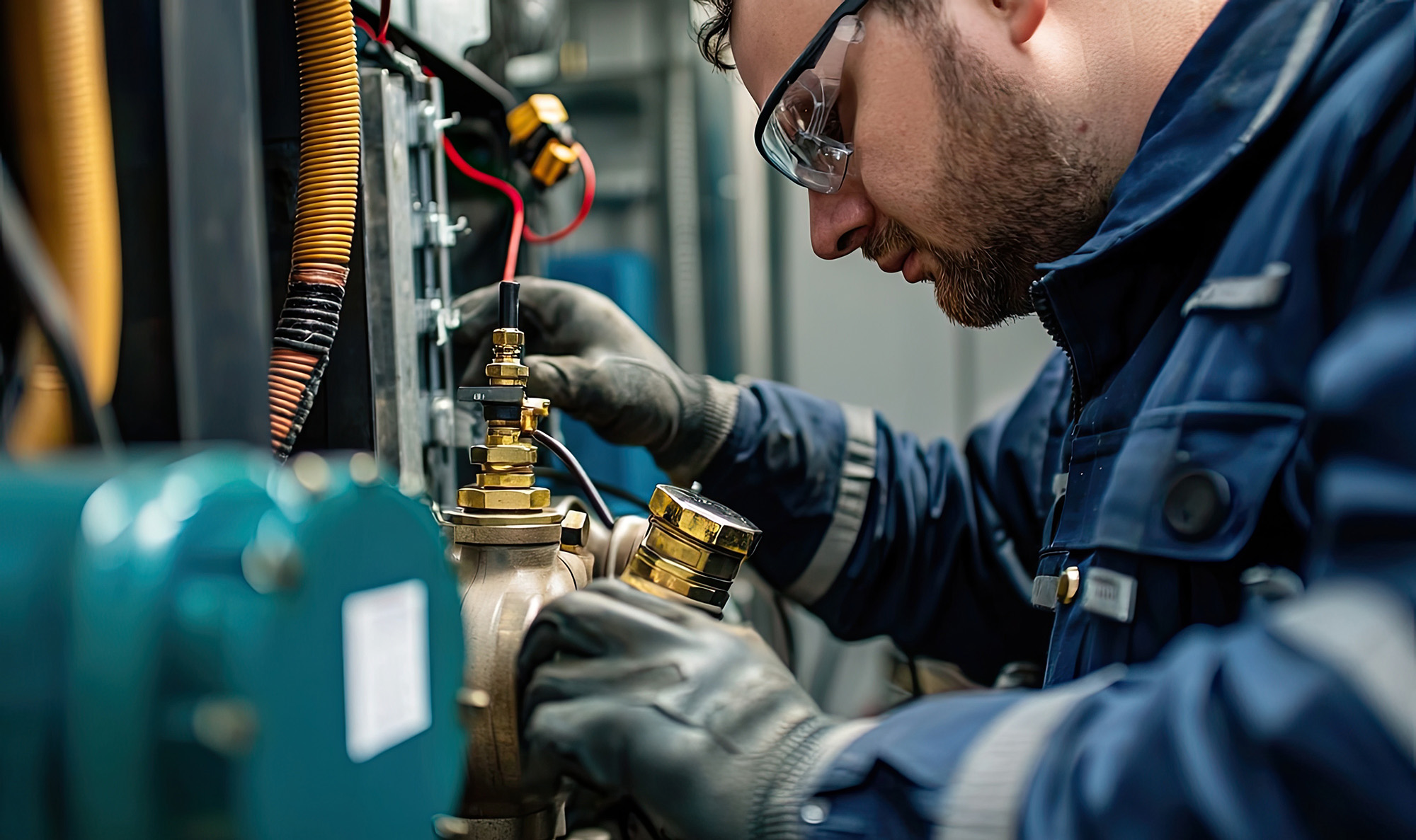
- Engineer arrives, diagnoses, and fixes or schedules follow up. Repair on the spot if parts allow; if not, clear next steps and timeline.
- You get a written callout report. Fault summary, action taken, recommendations for preventing recurrence.
What You Get


Types of Breakdown We Handle


Included With Every Callout
Our Guarantees


Who This Is For
- Any UK site where compressed air is critical and you cannot afford to wait.
- Factories, workshops, warehouses, logistics hubs, food production, automotive plants.
- Any brand of compressor, dryer, or ancillary equipment.
Clear, Transparent Pricing


Where We Cover
Based in Coventry with national coverage across the UK. Core service areas include the Midlands, London, North West, Yorkshire, and all major industrial regions. For multi-site contracts, we deploy engineers and trusted subcontractors nationwide.
Frequently Asked Questions
FAQ's
Air compressors function by drawing in atmospheric air and compressing it into a smaller volume using a piston, rotary screw, or other mechanism. This pressurised air is stored in a tank and released to power tools or equipment as needed.
The size depends on your tools’ air requirements, measured in PSI (pressure) and CFM (airflow). For small tasks like inflating tires, a compact unit suffices; for heavy-duty tools like sanders or grinders, you’ll need a larger tank and higher CFM output.
Reciprocating compressors use pistons and are ideal for intermittent use, like in small workshops. Rotary screw compressors use spinning screws for continuous operation, making them better for industrial settings with constant air demand.
Maintenance varies by type: oil-lubricated units need oil checks every few months and changes every 4,000-8,000 hours, while filters should be cleaned weekly and replaced yearly. Always follow the manufacturer’s guidelines.
Yes, overheating can occur due to poor ventilation, low oil levels, or overuse beyond its duty cycle. Ensuring proper airflow and regular maintenance helps prevent this issue.
No, we do not service or maintain piston compressors. At AirMech, our expertise lies in the supply, maintenance, and servicing of rotary screw compressors and other advanced compressed air systems. Piston compressors typically require a different approach to maintenance and servicing, which falls outside our scope of operations.
If you are seeking assistance with a piston compressor, we recommend contacting a specialist company that focuses on these types of compressors to ensure you receive the appropriate care and expertise for your equipment. Should you require recommendations, feel free to reach out to us, and we’ll do our best to point you in the right direction.
Condensate is a chemically aggressive fluid which consists of mostly water but also some oil and dirt. It is an unavoidable by-product of air compression, and legislation regarding disposal needs observing carefully to avoid the substantial fines associated with non-compliance.
The Water Resources Act (1991) states that it is an offence to knowingly pollute controlled waters by the disposal of poisonous, noxious or polluting matter. Compressor condensate comes under this description and can result in the polluter being liable for fines of up to £20,000 or in some cases imprisonment. This legislation is levelled towards the responsible person, and sanctions are taken against the individual, not the Company.
There is other relevant legislation covering the correct disposal of condensate to include ‘The Environmental Protection Regulations 1991’ and ‘The Water Industry Act 1991’. Additionally, the H&S Commission Statutory Instrument 1989, No 2169 covering Pressure Systems and Transportable Gas Containers, makes it clear that from 1994 all new installations should have condensate drainage points feeding into an oil-water separator prior to final discharge. Furthermore, the British Compressed Air Society states categorically that ‘Under no circumstances should it be permitted to discharge untreated compressed air condensate to public surface water, sewers, or to ground’ (CAC 9407).
As highlighted, the importance of implementing a proper procedure for the removal of compressor condensate is imperative if you want to avoid punishment.
AirMech suggests the following pro-active measures to ensure compliance:
• Install a timed/zero-loss drain on your air receiver – this allows condensate to be automatically drained from your air receiver. Zero-loss drains ensure that no compressed air is lost in the process, saving energy by not having to re-compress air lost when manually draining condensate.
• Install an oil-water separator – with low maintenance costs, this will ensure that condensate is treated correctly. Following treatment, the condensate is 99% water of which you can dispose of legally down the foul sewer drain.
Proper disposal of waste oil – following above treatment of condensate, this will ensure that any waste oil is disposed of correctly with an authorised waste disposal company who is registered as a ‘hazardous waste producer’ or ‘licensed waste carrier’.
If the above measures are implemented, then any visits from the Health and Safety Executive should run smoothly.
Airmech Head Office is based in Nuneaton, Warwickshire but we cover the whole of the UK. We are well served by central connections having excellent road links with good access to the A5, M6, M42 and M69 motorways.
Managing compressed air is a specialist service, with regulations and accreditations gained through training courses to fully meet manufacturers requirements. All Airmech engineers are manufacturer-trained and we have over 125+ years combined industry experience.
Like most well regarded companies AirMech have Employers, Public, Professional and Professional Indemnity insurance in place.
When making a big purchase, we like to give you options to assist with payment. AirMech partners with a well-known finance broker and we are happy to discuss varying payment terms on new equipment if required.
Compressor manufacturers support distributors with warranties from 2-10 years on main components provided they are serviced by AirMech as per the manufacturer's recommended schedule.
Airmech offers a full range of air compressor and air treatment servicing/repair options to meet your needs. We cover:
Compressors
Dryers
Filters
Condensate Systems
Under the Pressure System Safety Regulations (PSSR) 2000, the owner of a pressure system should have a Written Scheme of Examination (WSE). Airmech can assist with the creation of a WSE, which lists all of the critical components of the pressure system which require examination by a competent person.
What is the difference between a screw, vane and piston compressor?
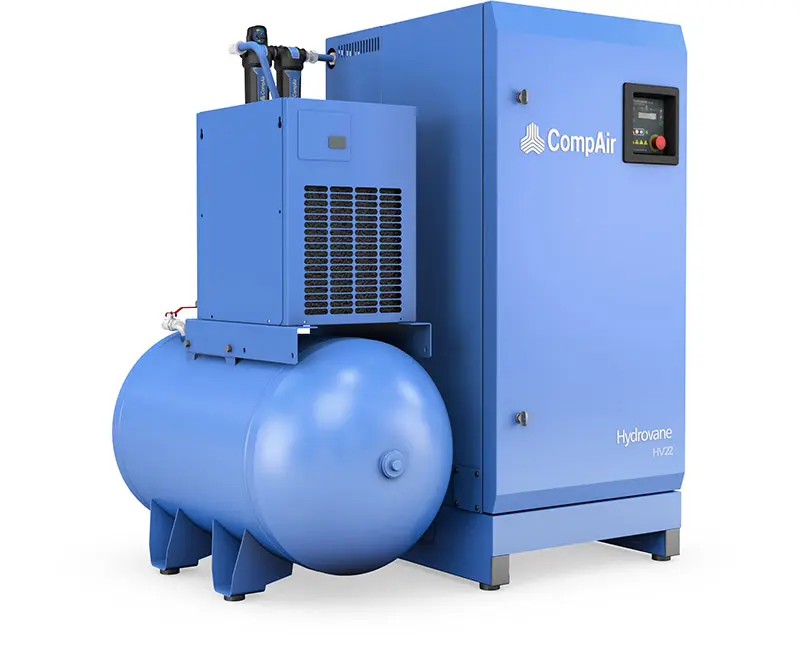
Reciprocating compressors use pistons to compress air within cylinders, which is then sent to the pressurised receiving tank for use. Rotary compressors, on the other hand, use rotors, and rotary vane compressors use a single rotor with longitudinal slots and vanes, which slide in and out of the rotor to form compression pockets. AirMech is fully conversant with all types of compressor and can help you to select the best type for your application.
Screw Compressors: These compressors use two interlocking screws to compress air. They operate quietly and efficiently, making them ideal for large industrial settings. However, they tend to be more expensive and complex to maintain.
Vane Compressors: Vane compressors have a slotted rotor with varying blade placement that compresses air. They are compact and reliable, suitable for moderate use. They are generally less efficient at higher pressures.
Piston Compressors: Piston compressors use pistons driven by a crankshaft to compress air at high pressures. They are simple and ideal for high-pressure tasks in automotive and construction. They are noisier and vibrate more compared to other compressors.
Each type is best suited to specific tasks, with the choice depending on your needs and operational environment.
Big results for businesses of every size
We’ve helped customers all over the United Kingdom take their business to the next level. From SME's to enterprise organisations – everyone can find new ways to save time and money.

£1,729
Annual Cost Savings
"The expertise and tailored solutions from Airmech were crucial during our site expansion. Their advanced compressed air system not only enhances our operational..."

40%
Saved nearly 40% in potential loss in operational costs
"A massive thank you for getting White Co. up and running so quickly. I'll recommend we set up regular checks. Do put something together and send it!"
Ready to take Airmech for a spin?
Free quote when you submit your details
For immediate service call
BROCHURE
Get updates on industry innovations and the latest company brochure
Enjoy Easier Compressor Servicing
After 44+ years of assisting local industry with their compressed air, we've still not found a dependable and affordable alternative option. So our customers keep coming back.

Industry Accreditations



Contact Us
Legal
Terms of Service
Privacy Policy
© 2026 Airmech
Innovated by

Bortonhall Limited t/a Airmech (Company registration No. 01520720) Unit 5 Anker Court, Alliance Close, Attleborough Fields Ind Estate, Nuneaton CV11 6SD